

Cities and Climate Change
Cities are central and highly complex spheres of action in the context of climate change. The majority of the world’s population already lives in urban areas, and this proportion is continuing to rise. The high concentration of people and infrastructure, combined with substantial resource requirements, makes urban areas major drivers of climate change while also rendering them highly vulnerable to its impacts. At the same time, climate change is altering the natural conditions of urban environments and presenting established approaches to urban development with new challenges. Cities are therefore not only important sites for climate mitigation but also central spheres of action for climate adaptation.
Municipal Climate Adaptation
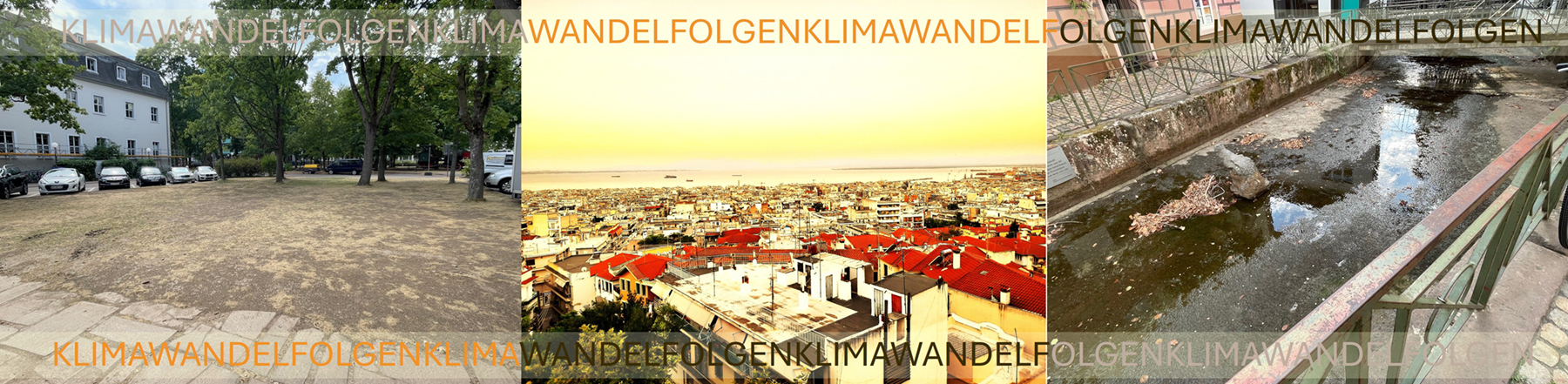
The summers of recent years have highlighted the challenges climate change poses for cities. Prolonged periods of heat and drought affect densely built-up and highly sealed settlements, while heavy rainfall events increasingly place pressure on drainage systems and urban infrastructure. The impacts of both types of extreme events are amplified by the specific characteristics of urban areas.
Municipal climate adaptation encompasses the strategies and measures through which cities respond to these developments. Key areas of action currently include adapting to summer heat and preparing for heavy rainfall events. Municipalities play a pivotal role in this process, as many adaptation measures are planned, coordinated, and implemented at the local level. At the same time, the question arises as to whether existing instruments and planning approaches are sufficient to address future challenges effectively.
Research Agenda
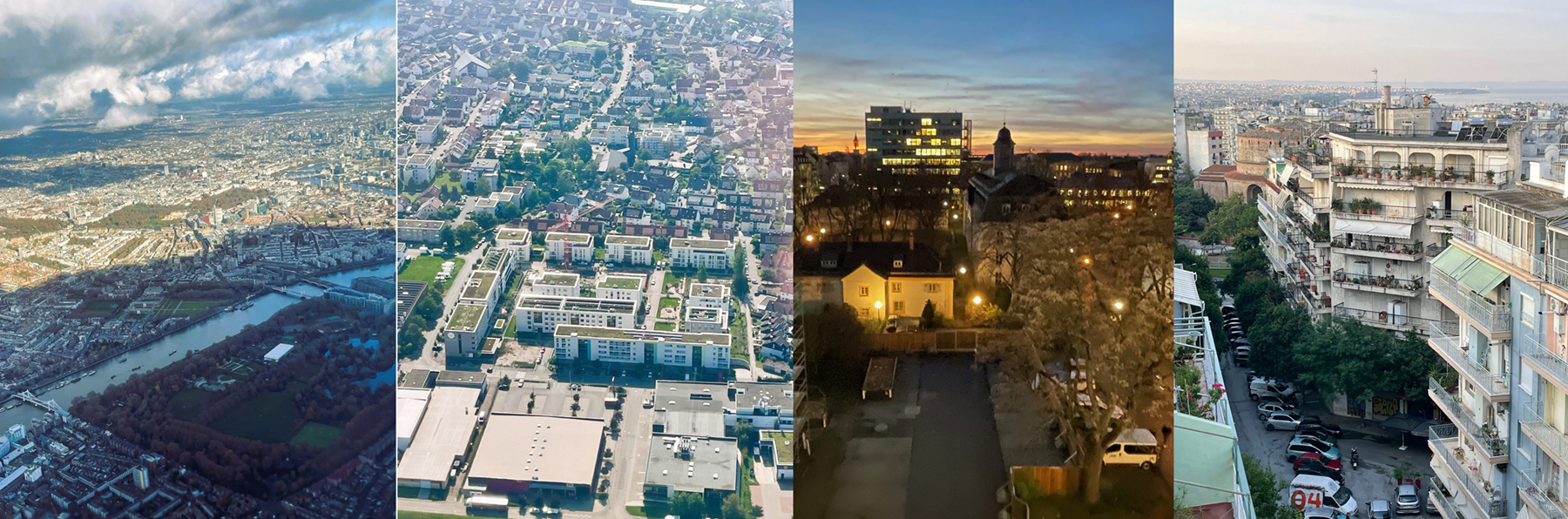
The research presented investigates urban areas at the intersection of climate change and municipal climate adaptation. It addresses questions related to municipal governance and planning, the spatial and functional characteristics of cities, and climate-related risks in urban environments. By integrating perspectives from urban and regional planning, geography, urban climatology and biometeorology, this interdisciplinary approach contributes to a deeper understanding of the current conditions and starting points of cities in the context of climate change.
The following questions guide the research:
- What drives and constrains municipal climate adaptation?
Despite extensive scientific knowledge and the growing societal relevance of climate adaptation, considerable differences remain in its implementation at the municipal level. The project investigates the institutional, planning, and administrative conditions of municipal governance, as well as existing barriers and the scope for action within planning practice (Boehnke et al. 2023; Boehnke 2025; Boehnke 2025b).
In addition, approaches are being developed to use scientific methods to generate practice-oriented findings and thereby support complex planning decisions (Boehnke & Walter 2025; Gallacher & Boehnke 2025; Keller et al. 2025; Naber et al. 2022; Böhnke & Norra 2021). - How can urban structures relevant to climate adaptation be assessed?
Effective climate adaptation requires reliable information about the current conditions of cities. The project therefore focuses on methods for analysing and assessing urban green infrastructure and ecosystem services, surface sealing, public spaces, and urban structures relevant to the adaptive capacity and vulnerability of cities (Boehnke et al. 2022; Naber et al. 2022; Böhnke & Jerutka 2020). - How are cities affected by changing summer climate conditions?
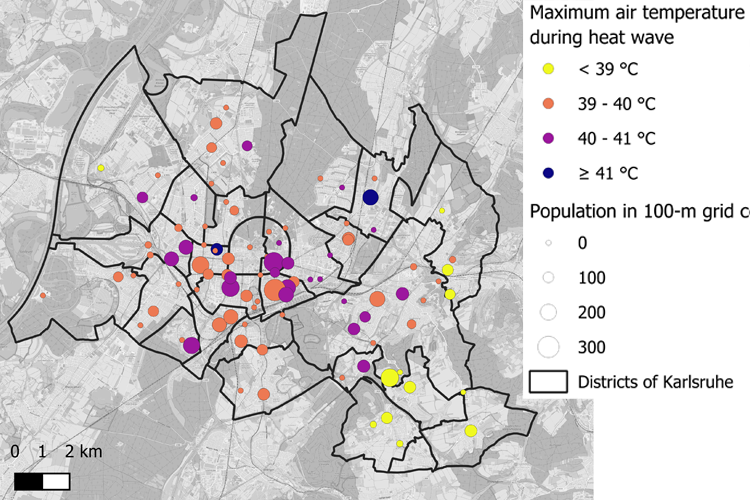
The climate-change-driven increase in summer heat is one of the greatest challenges facing European cities. The project investigates spatial temperature patterns within cities, their variation during summer heat events, and the associated impacts. It also analyses the specific consequences of increasingly severe periods of heat and drought for urban areas and infrastructure. The aim is to improve understanding of emerging climate-related stresses and risks that will shape the conditions of cities in Germany and across Europe in the near future (Gkirmpas et al. 2025; Schäfer et al. 2023; Mohr et al. 2026).
For research to be socially relevant, it must meet the needs of practitioners and the general public. Participating in and supporting administrative and political discourse, maintaining the closest possible connection to real-world practice through specialised continuing education programmes (such as the Certificate in Climate Adaptation Management) and collaborating on VDI Guideline 3787, 'Urban Development in the Context of Climate Change', bridges the transdisciplinary gap between practice and society, fostering research that is closely aligned with practical implementation.
References:
Mohr S. et al. (2026): CEDIM Forensic Disaster Analysis (FDA) Group: Heat wave June 2026: Western and Central Europe. DOI: 10.5445/IR/1000195086
Boehnke D. (2025): Municipal planning challenges in adapting to heat and the role of practical guidelines. In npj Clim. Action 4 (1). DOI: 10.1038/s44168-025-00285-8.
Boehnke D. (2025b): Transformative Governance through Embedded Scientific Collaboration. Edited by Barbara Engel. KITopen (Urban Transformation 2025 - Connecting urban sustainability labs. Vol. 1: Contributions and Keynotes.). DOI: 10.5445/IR/1000192656
Böhnke D. H., Walter M. E. (2025): Maßnahmensammlung zur kommunalen Klimaanpassung. Veröffentlicht in KITopen. DOI: 10.35097/hskt7ytp75d90269
Gallacher C., Boehnke D. (2025): Pedestrian thermal comfort mapping for evidence-based urban planning; an interdisciplinary and user-friendly mobile approach for the case study of Dresden, Germany. In International journal of biometeorology 69 (11), pp. 2895–2912. DOI: 10.1007/s00484-024-02830-2.
Gkirmpas P., Tsegas G., Boehnke D., Vlachokostas C., Moussiopoulos N. (2025): Temperature Prediction at Street Scale During a Heat Wave Using Random Forest. In Atmosphere 16 (7), p. 877. DOI: 10.3390/atmos16070877.
Keller S., Benz S., Jehling M., Böhnke D., Hager G., Wursthorn S., Gallacher C., Reiter D., Hänchen L., Kistner F., Krikau S., Schenk A., Hinz S. (2025): Entwicklung von Planungshilfen für Klimaschutz und Klimaanpassung in der räumlichen Gesamtplanung mittels Fernerkundung - Abschlussbericht.
Boehnke D., Jehling M., Vogt J. (2023): What hinders climate adaptation? Approaching barriers in municipal land use planning through participant observation. In Land Use Policy 132, p. 106786. DOI: 10.1016/j.landusepol.2023.106786.
Schäfer A., Mühr B., Kaiser F., Böhnke D., Mohr S., Kunz M. (2023): CEDIM Forensic Disaster Analysis (FDA) Group: Untersuchung der globalen Hitzewelle im Jahr 2023.
Boehnke D., Krehl A., Mörmann K., Volk R., Lützkendorf T., Naber E., Becker R., Norra S. (2022): Mapping Urban Green and Its Ecosystem Services at Microscale—A Methodological Approach for Climate Adaptation and Biodiversity. In Sustainability 14 (15), p. 9029. DOI: 10.3390/su14159029.
Naber E., Volk R., Mörmann K., Boehnke D., Lützkendorf T., Schultmann F. (2022): Namares—A Surface Inventory and Intervention Assessment Model for Urban Resource Management. In Sustainability 14 (14), p. 8485. DOI: 10.3390/su14148485.
Böhnke D., Norra S. (2021): Stadtquartiere im Wandel, Kommunales Niederschlagsmanagement in Bestand und Neubau – Erkenntnisse praxisnaher Forschung. In Transforming cities (3), pp. 34–39.
Böhnke D., Jerutka K. (2020): Stadtplätze: Zur Bewertung der Aufenthaltsqualität von urbanen Räumen. In Stadt und Raum (6), pp. 330–335.
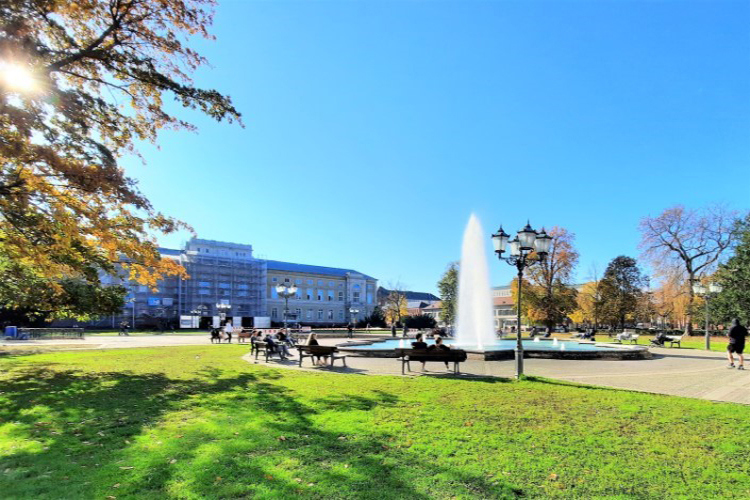
Cities are complex systems, and their transformation can only be achieved through collaboration between different disciplines and stakeholders. KIT Urban Research brings together science, practice, and society to develop solutions for the cities of tomorrow.
The German summary of the FDA report from July provides a concise overview of the key findings of the original English report.
link (in German)
As of 7 Juli 2026
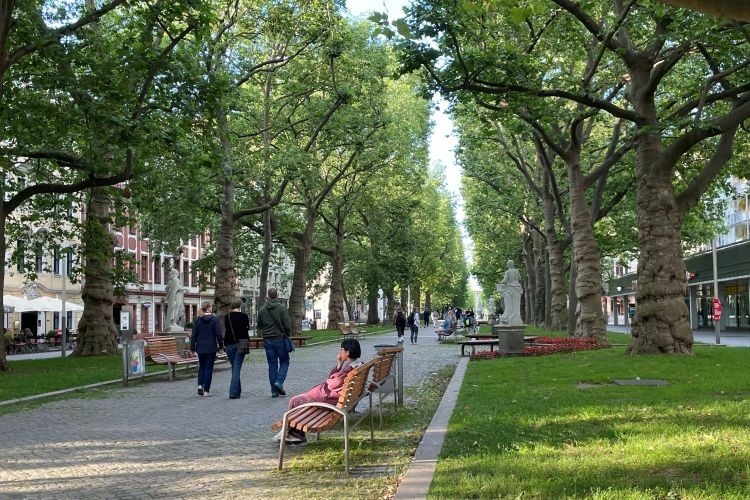
At the Black2GoGreen conference, over 120 experts in academia, urban planning, and other fields discussed how preserving mature trees and optimizing sites for new plantings are key components of climate-resilient cities.
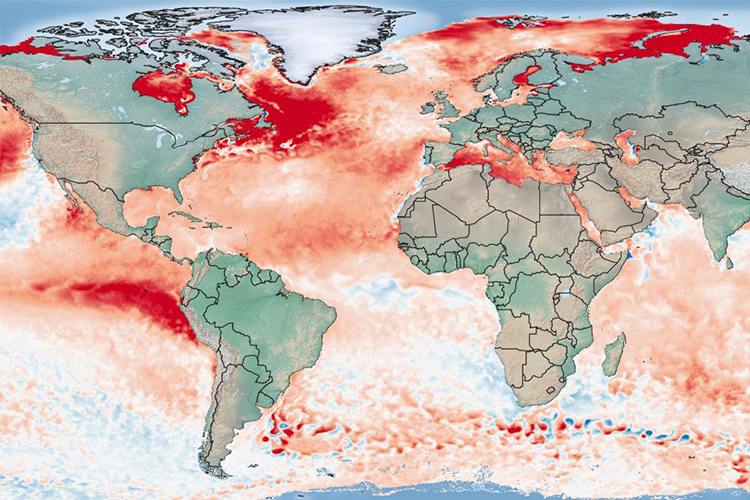
KIT press release on CEDIM report on this year's temperature records in the northern hemisphere - heat hotspot in Europe was Italy by far.
The CEDIM PhD project on summer heat investigates the relationship between remote sensing observations, local measurements, and subjective perceptions of the population in downtown Karlsruhe.